
Introduction
In today’s digital-first world, having a strong online presence is no longer optional—it’s essential. Whether you’re a startup, small business, freelancer, or established company, a well-planned digital marketing strategy helps you attract the right audience, generate leads, and increase sales.
However, many businesses jump into social media posting or running ads without a clear plan. The result? Wasted time, money, and effort.
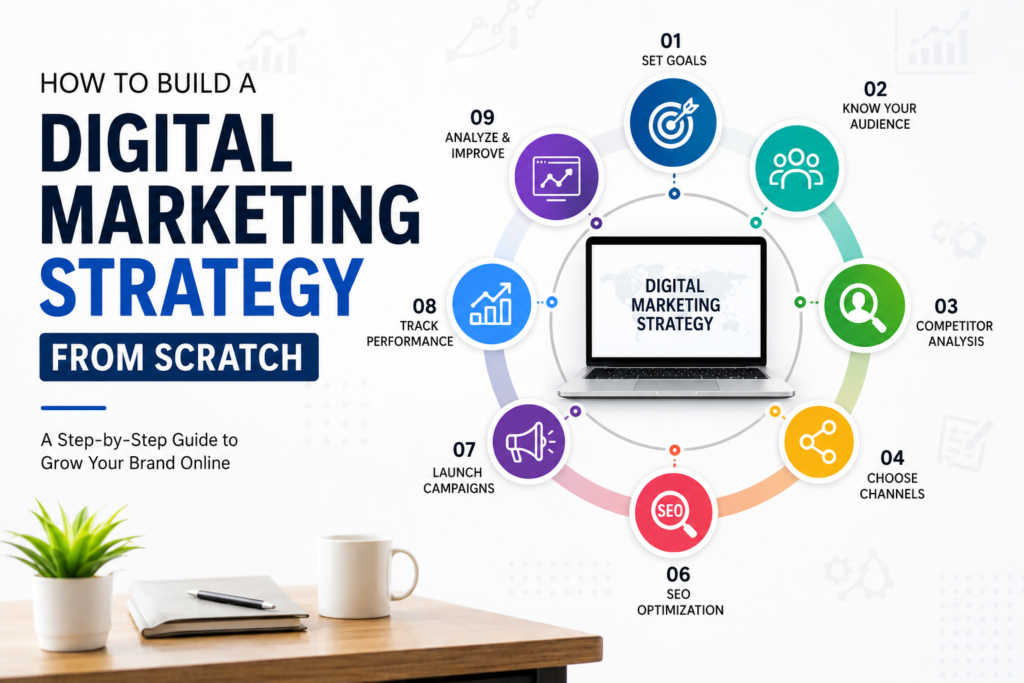
This comprehensive guide will walk you through the exact process of building a digital marketing strategy from scratch, even if you’re starting with zero experience.
What Is a Digital Marketing Strategy?
A digital marketing strategy is a structured plan that outlines how your business will use online channels to achieve specific marketing goals.
These channels may include:
- Search Engine Optimization (SEO)
- Content Marketing
- Social Media Marketing
- Email Marketing
- Pay-Per-Click (PPC) Advertising
- Influencer Marketing
- Video Marketing
- Affiliate Marketing
A successful strategy ensures every marketing activity supports your business objectives.
Why Your Business Needs a Digital Marketing Strategy
Without a strategy, marketing efforts become random and inconsistent.
Benefits of Having a Digital Marketing Strategy
✅ Clear business direction
✅ Better customer targeting
✅ Improved ROI
✅ Consistent brand messaging
✅ Easier performance tracking
✅ Higher lead generation and sales
According to industry research, businesses with documented marketing strategies are significantly more likely to achieve their goals than those without one.
Step 1: Define Your Business Goals
Every successful strategy begins with clear objectives.
Ask yourself:
- Do you want more website traffic?
- Are you trying to generate leads?
- Do you want to increase online sales?
- Are you focused on brand awareness?
- Do you want customer retention?
Use SMART Goals
Your goals should be:
| SMART Element | Meaning |
|---|---|
| Specific | Clearly defined |
| Measurable | Quantifiable |
| Achievable | Realistic |
| Relevant | Supports business growth |
| Time-Bound | Has a deadline |
Example
Bad Goal:
“Increase website traffic.”
Good Goal:
“Increase organic website traffic by 30% within six months.”
Step 2: Understand Your Target Audience
Marketing becomes much easier when you know exactly who you’re targeting.
Gather Audience Information
Research:
- Age
- Gender
- Location
- Income level
- Occupation
- Interests
- Online behavior
- Pain points
- Purchasing habits
Create Buyer Personas
A buyer persona is a fictional representation of your ideal customer.
Example Persona
Name: Sarah
Age: 32
Profession: Small Business Owner
Challenge: Needs affordable marketing solutions
Goal: Increase online sales
Knowing your audience helps create content and campaigns that resonate with them.
Step 3: Analyze Your Current Position
Before planning where to go, understand where you currently stand.
Conduct a digital marketing audit.
Review Your:
- Website
- Social media profiles
- Existing content
- SEO performance
- Email marketing campaigns
- Advertising efforts
Perform a SWOT Analysis
| Strengths | Weaknesses |
|---|---|
| Strong product | Low website traffic |
| Good customer service | Weak SEO |
| Opportunities | Threats |
|---|---|
| Growing market | Strong competitors |
| New platforms | Industry changes |
This analysis reveals improvement opportunities.
Step 4: Research Your Competitors
Competitor analysis helps identify what works in your industry.
Study:
- Their website
- Blog content
- Keywords
- Social media activity
- Ad campaigns
- Email marketing
Key Questions
- What content performs best?
- Which keywords are they targeting?
- Which platforms drive engagement?
- What gaps can you exploit?
Competitor insights can accelerate your growth.
Step 5: Establish Your Unique Value Proposition (UVP)
Your Unique Value Proposition explains why customers should choose you over competitors.
A strong UVP should answer:
- What problem do you solve?
- Who do you help?
- Why are you different?
Example
“We help small businesses generate more leads through affordable, data-driven digital marketing solutions.”
Your UVP should be reflected across all marketing channels.
Step 6: Build Your Brand Identity
A strong brand creates recognition and trust.
Essential Brand Elements
- Logo
- Brand colors
- Typography
- Voice and tone
- Messaging guidelines
Define Your Brand Voice
Examples:
- Professional
- Friendly
- Educational
- Authoritative
- Humorous
Consistency builds credibility.
Step 7: Create a High-Converting Website
Your website is the foundation of your digital marketing strategy.
Website Essentials
Mobile-Friendly Design
Most users browse on mobile devices.
Fast Loading Speed
Slow websites increase bounce rates.
Clear Navigation
Help visitors find information quickly.
Strong Calls-to-Action (CTAs)
Examples:
- Get a Free Quote
- Book a Demo
- Download Now
SEO Optimization
Ensure pages are optimized for search engines.
Step 8: Develop a Content Marketing Strategy
Content drives traffic, engagement, and conversions.
Content Types
- Blog posts
- Videos
- Infographics
- Podcasts
- E-books
- Case studies
- Webinars
Create Content Around Customer Needs
Answer questions your audience frequently asks.
Content Funnel Framework
Top of Funnel (Awareness)
- Educational blogs
- Social posts
- Videos
Middle of Funnel (Consideration)
- Case studies
- Comparisons
- Webinars
Bottom of Funnel (Decision)
- Product demos
- Testimonials
- Free trials
Step 9: Implement SEO
Search Engine Optimization helps your website rank higher on search engines.
Key SEO Components
Keyword Research
Find terms your audience searches for.
On-Page SEO
Optimize:
- Titles
- Meta descriptions
- Headers
- Images
- URLs
Technical SEO
Improve:
- Site speed
- Mobile usability
- Crawlability
Link Building
Earn quality backlinks from authoritative websites.
SEO Benefits
- Long-term traffic
- Higher credibility
- Better conversion rates
Step 10: Choose the Right Social Media Platforms
You don’t need to be everywhere.
Focus on platforms where your audience spends time.
Platform Guide
| Platform | Best For |
|---|---|
| Community building | |
| Visual content | |
| B2B marketing | |
| X (Twitter) | Industry updates |
| YouTube | Video marketing |
| TikTok | Short-form content |
Create a posting schedule and remain consistent.
Step 11: Launch Email Marketing Campaigns
Email remains one of the highest ROI marketing channels.
Build an Email List
Offer:
- Free guides
- Checklists
- Discounts
- Webinars
Email Campaign Types
Welcome Emails
Introduce your brand.
Newsletter Emails
Share updates and insights.
Promotional Emails
Drive sales and conversions.
Nurture Campaigns
Build trust over time.
Personalization improves engagement.
Step 12: Invest in Paid Advertising
Organic growth takes time.
Paid advertising can accelerate results.
Popular Advertising Channels
- Google Ads
- Facebook Ads
- Instagram Ads
- LinkedIn Ads
- YouTube Ads
Best Practices
- Define campaign objectives
- Target the right audience
- Test multiple ad creatives
- Monitor conversions
Start small and optimize based on performance.
Step 13: Set Key Performance Indicators (KPIs)
You cannot improve what you do not measure.
Important Marketing KPIs
Website Metrics
- Traffic
- Bounce rate
- Session duration
SEO Metrics
- Keyword rankings
- Organic traffic
- Backlinks
Social Media Metrics
- Reach
- Engagement
- Followers
Email Metrics
- Open rate
- Click-through rate
- Conversion rate
Sales Metrics
- Leads generated
- Cost per acquisition
- Revenue growth
Track these consistently.
Step 14: Use Marketing Automation
Automation saves time and improves efficiency.
Tasks You Can Automate
- Email sequences
- Social media scheduling
- Lead nurturing
- Customer follow-ups
- Reporting
Automation allows your team to focus on strategy rather than repetitive tasks.
Step 15: Continuously Analyze and Optimize
Digital marketing is never “set and forget.”
Review performance regularly.
Monthly Review Checklist
✓ Website traffic growth
✓ Lead generation
✓ Conversion rates
✓ SEO rankings
✓ Social engagement
✓ Ad performance
Ask Yourself
- What’s working?
- What’s not working?
- Where can we improve?
Small improvements over time create significant growth.
Common Digital Marketing Strategy Mistakes to Avoid
1. No Clear Goals
Without goals, success cannot be measured.
2. Ignoring Analytics
Data should guide decisions.
3. Targeting Everyone
Specific targeting produces better results.
4. Inconsistent Content
Consistency builds audience trust.
5. Neglecting SEO
SEO is a long-term traffic asset.
6. Focusing Only on Sales
Provide value before asking for conversions.
Sample Digital Marketing Strategy Framework
Goal
Increase qualified leads by 25% in six months.
Audience
Small business owners aged 25–45.
Channels
- SEO
- Blog content
- Email marketing
- Google Ads
Content Plan
- 2 blog posts per week
- 3 LinkedIn posts per week
- Monthly webinar
- Weekly newsletter
KPIs
- Organic traffic
- Leads generated
- Conversion rate
- Cost per lead
Conclusion
Building a digital marketing strategy from scratch may seem overwhelming, but following a structured process makes it manageable and highly effective.
Start by defining clear goals, understanding your audience, creating valuable content, optimizing for search engines, leveraging social media, and continuously measuring results.
Remember that digital marketing success doesn’t happen overnight. Consistency, data-driven decisions, and continuous improvement are the keys to long-term growth.
By implementing the steps outlined in this guide, you’ll have a solid digital marketing strategy that attracts customers, increases brand visibility, and drives sustainable business growth.
Meta Title: How to Build a Digital Marketing Strategy from Scratch (Step-by-Step Guide)
Meta Description: Learn how to build a digital marketing strategy from scratch with this complete step-by-step guide. Discover SEO, content marketing, social media, email marketing, KPIs, and optimization techniques for long-term growth.
Suggested URL Slug:/how-to-build-a-digital-marketing-strategy-from-scratch